
Lecture 4 · Higher-Order Functions
On this page
- higher-order function is a funtion that takes a function as an argument or return value.
If and call expressions
- Conditional evaluation lets us handle values that would otherwise be undefined without raising an error.
- Using a regular if statement
def real_sqrt(x):
	### return the real part of the square root of x ###
	if x >= 0:
		return sqrt(x)
	else:
return 0 - Using a function
def if_(c, t, f):
	if c:
		return t
	else:
		return f
from math import sqrt
def real_sqrt(x):
	return if_(x >= 0, sqrt(x), 0)
	### 这里会先行evaluate () 内的函数,如果有错,则先于if_ 报错 ###
High order funtions
-
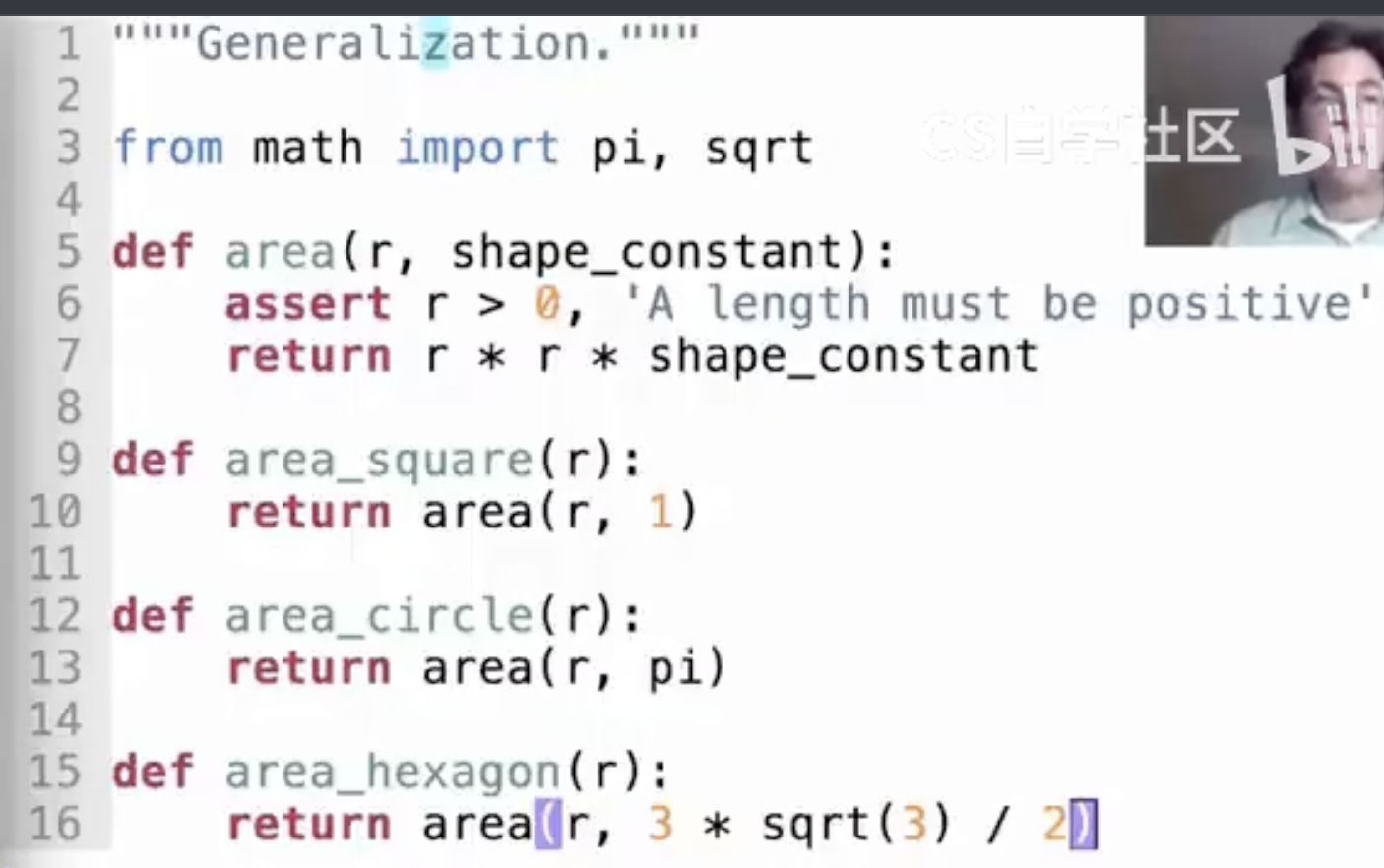
generalize the funtion
- assert 3 > 2, ‘Math is broken’
- If the condition is false, the assertion displays the error message that follows.
-
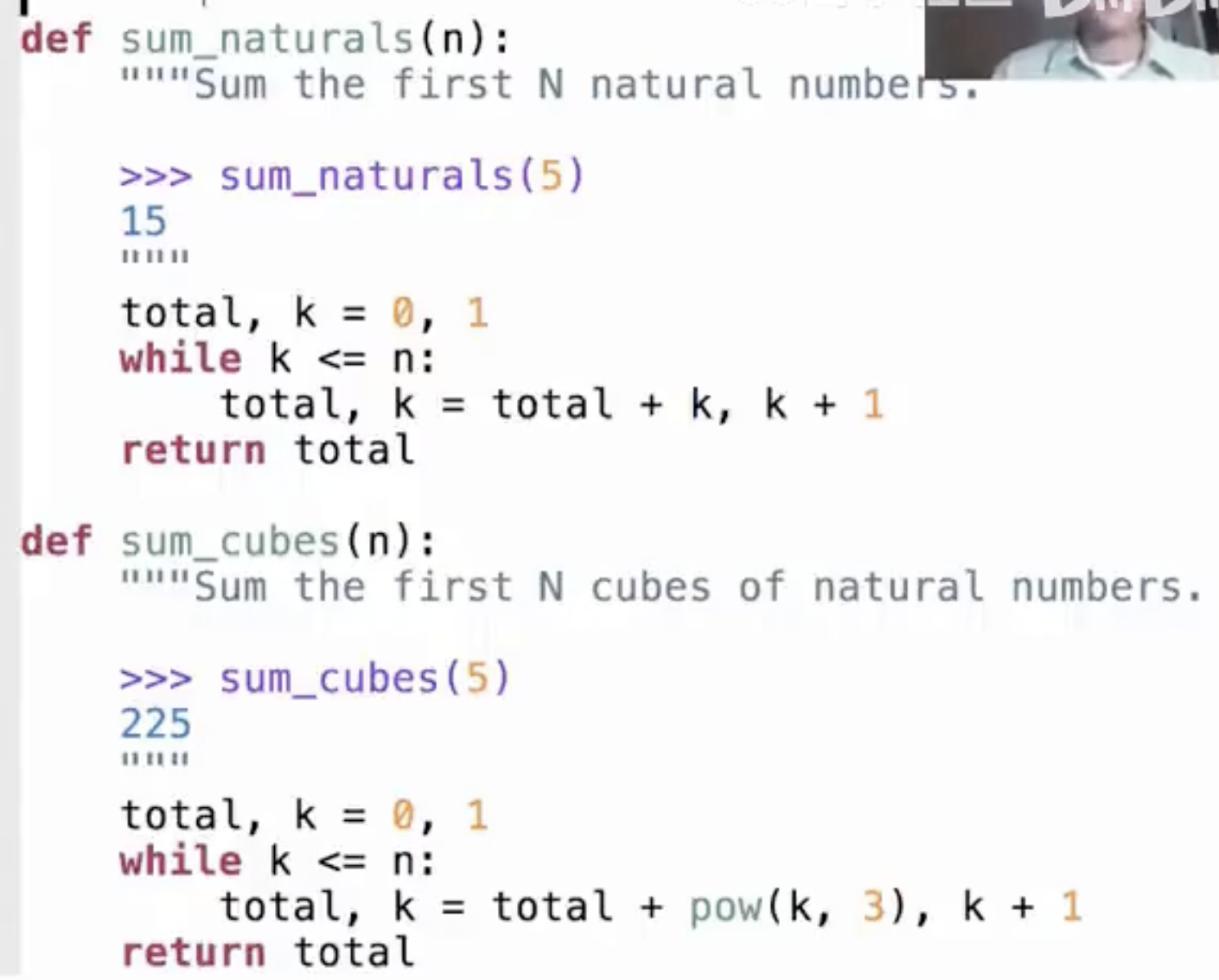
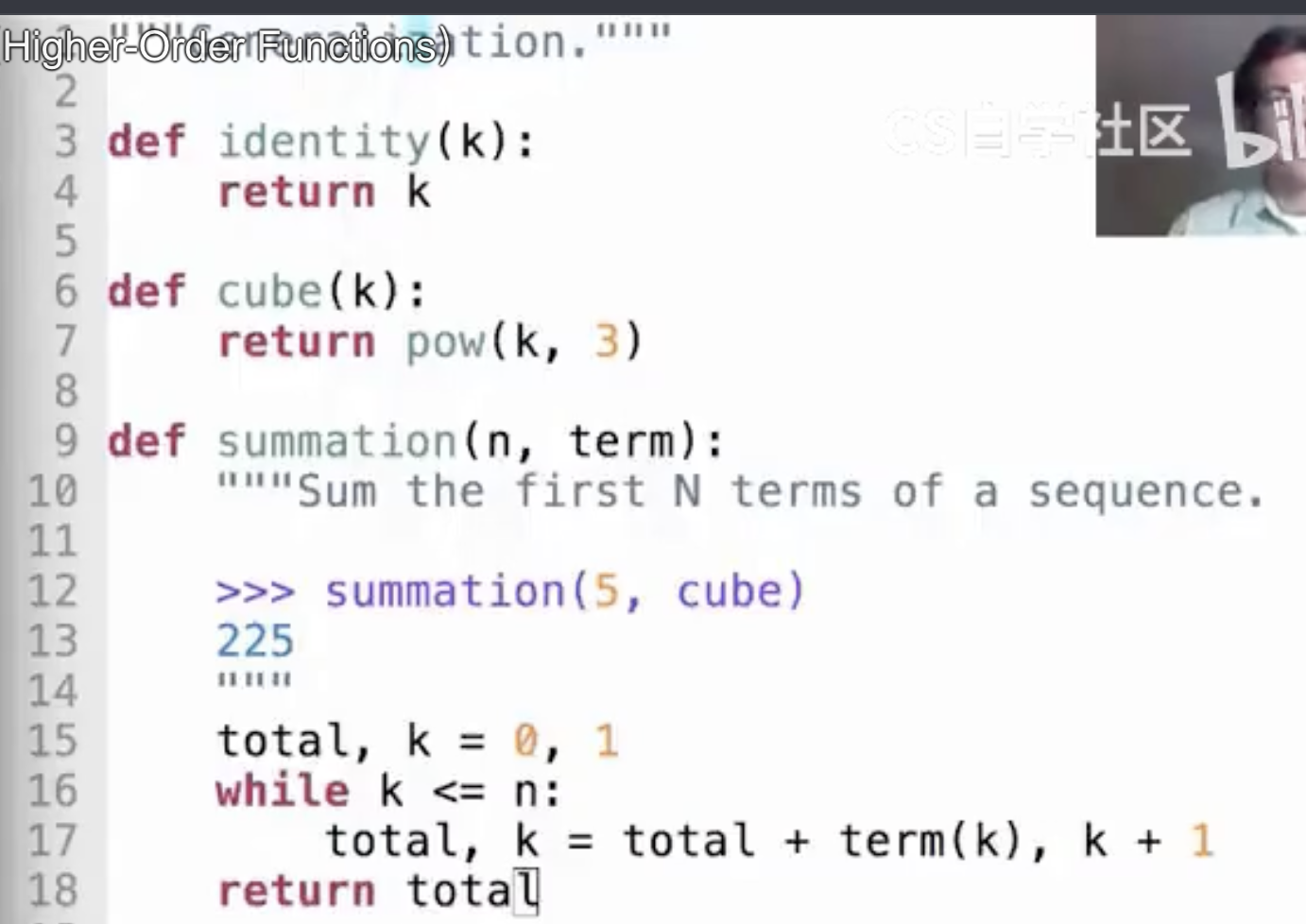
generalize the math
- Before generalization:
- After generalization
- Before generalization:
Funtions as return values
def make_adder(n):
	def adder(k):
		return k + n
	return adder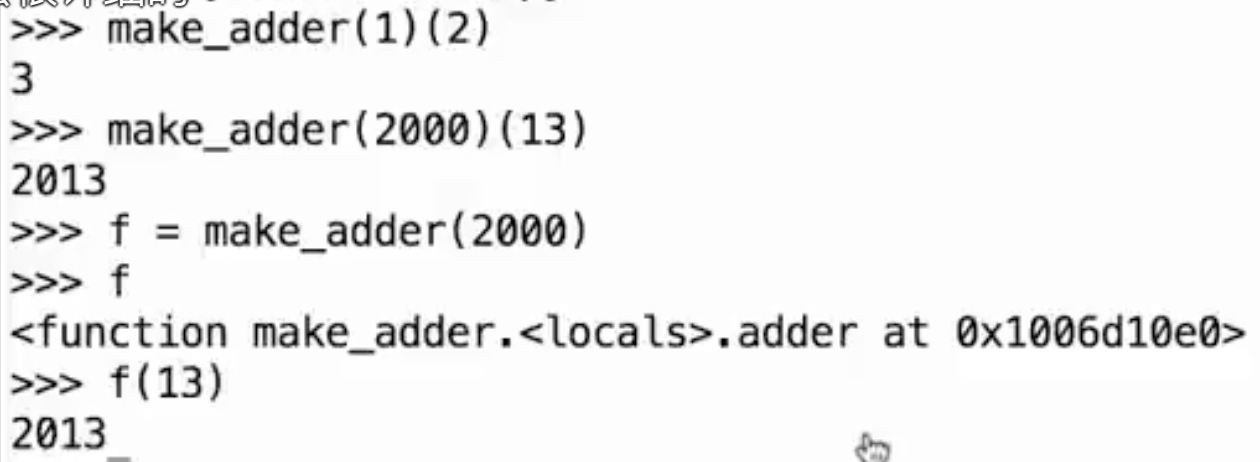
English translation · Read Chinese original